Francia
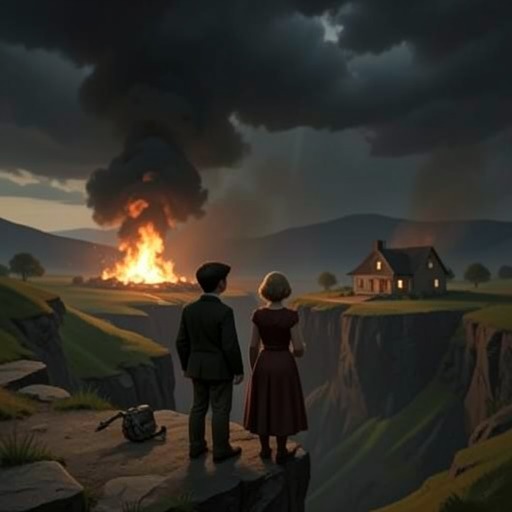
The Knife of Never Letting GoFrancia is Hildy’s sister and the Deputy Mayor of Farbranch. She first meets Todd and Viola with suspicion, asking what trouble they are bringing to her town; as the threat becomes clearer, she agrees to shelter them and says the town had been moving toward protecting them. Her role brings together civic responsibility, family ties, and the practical limits of refuge under military pursuit.
Identity and First Appearance
Francia appears when Hildy brings Todd and Viola to the Deputy Mayor’s house. Todd recognizes the house as a mayor’s residence, and Hildy identifies its occupant as her sister. Francia is introduced as a younger, fuller-faced, more frowning counterpart to Hildy. The sisters exchange nods rather than embracing or shaking hands, a restrained greeting that establishes their reserve without explaining its cause.
Francia’s first concern is the danger attached to the two newcomers. Looking them over, she asks what trouble they are bringing into her town. Hildy answers that they are fleeing for safety and challenges Francia to say whether Farbranch is a refuge. Francia clarifies that her worry is not about Todd and Viola themselves, but about the army following them. Her initial suspicion is therefore directed toward the consequences of sheltering them, rather than a stated wish to turn them away.
Shelter and Civic Responsibility
When Hildy has to return to her farm, she tells Todd and Viola that Francia has agreed to look after them for the day and that she will come back that evening. The two fugitives look at one another, suddenly reluctant to be left without Hildy. Francia responds to the moment by insisting that, despite what her sister may have said about her, she is not an ogre. The exchange makes her temporary guardianship concrete: she accepts responsibility for them even though their arrival brings danger to Farbranch.
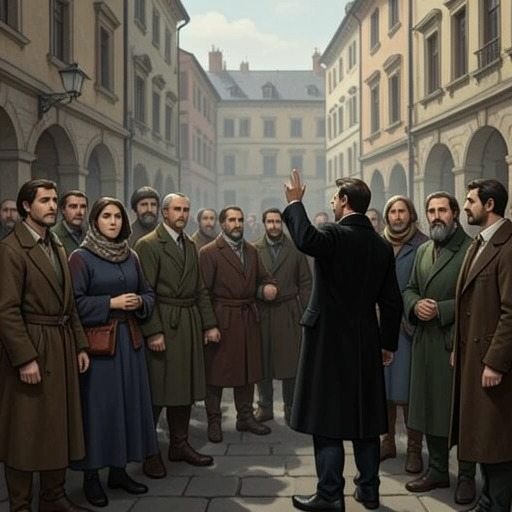
Later, when Todd questions what kind of woman she is, Francia answers with a direct assurance that she will not hand him or Viola over. She describes the town meeting as having moved toward protecting both of them from what was almost certainly coming. Her confidence is qualified: looking toward Matthew Lyle, she allows that the town may not be able to keep that promise. The qualification shows the gap between a decision to offer refuge and the ability to defend it against an approaching force.
Francia also acts promptly when Todd asks where Viola is. She tells him Viola is back at her house and urges him to come inside. That brisk change from deliberation to action reinforces the practical side of her role: her concern is expressed not only through a public position at the town meeting but through securing shelter for the people at risk.
Family and Characterization
Hildy and Francia’s relationship is marked by familiarity and disagreement. Hildy speaks for the fugitives and presents their need for refuge; Francia challenges the danger their presence may bring. Their exchange over whose town Farbranch is suggests a contest over responsibility and authority, but the evidence does not establish a lasting break between them. Later, Hildy entrusts the pair to Francia, and Francia accepts the task. Their shared concern for the newcomers thus matters more than their initial difference in approach.
Francia’s manner shifts with the circumstances. She begins with crossed arms and a frown, wary of what the army’s pursuit could mean for her community. She then offers reassurance, accepts responsibility while Hildy is away, and moves quickly to bring Todd inside when he returns. The scenes present caution and care together: she does not minimize the threat, but neither does she treat the fugitives as expendable because they have brought it to Farbranch.
Place in the Novel’s Wider Conflict
Francia’s fear of the pursuing army sits within a world shaped by recurring collective violence. Ben later describes how hardship on the New World gave rise to preaching that blamed the Spackle, how that movement became a war, and how the human advantage in weapons led to the Spackle’s defeat. Todd then recounts that men in Prentisstown, influenced by Mayor Prentiss and Aaron, killed women and men who tried to protect them. Further revelations expose executions disguised as disappearances and a coming-of-age practice that made boys responsible for killing men, with the community complicit.
These revelations do not establish Francia’s involvement in those events. Instead, they enlarge the stakes surrounding her decision to protect Todd and Viola: the novel’s history includes communities turning fear and blame into organized violence, while Francia’s response is to recognize the danger and still offer refuge. Her promise remains vulnerable to the approaching army, making her brief role a pointed example of both the moral choice to protect outsiders and the limits imposed on that choice by force.